
Directly across the parking lot from Staples

The Cape’s Premiere Pottery Studio & Supply
From premium clay bodies to professional-grade glazes and precision tools, we provide everything you need to shape your creative vision right here in Hyannis.
Visit the studio today to browse our full selection—we're here to help you select the perfect materials for your throwing and handbuilding needs.
click to purchase e-gift cards


Vibrant Glazes & Underglazes
A curated collection of brilliant underglazes to complex reactive glazes, we provide the palette for your masterpiece.
Pottery glazes are an important part of the ceramic process, adding color, surface texture, depth, protection, and personality to a finished piece. A glaze is a specially formulated coating that is applied to clay before firing.
Glazes are often chosen based on firing temperature, clay body, desired finish, and the intended use of the piece. Some glazes are created for decorative work, while others are designed for durable, functional pottery such as mugs, bowls, plates, and serving pieces. Understanding the difference between glaze types helps potters make thoughtful choices and achieve more successful results in the kiln.
Low-fire glazes are fired at lower temperatures and are often known for their bright, vivid colors. They are commonly used for decorative ceramics, school projects, paint-your-own pottery pieces, and beginner-friendly work. Because low-fire clay and glaze do not typically vitrify in the same way as higher-fired ceramics, they are often best suited for decorative or light-use pieces.
Mid-fire glazes are a popular choice for many potters because they offer a beautiful balance of color, durability, and versatility. Fired at moderate temperatures, mid-fire glazes are commonly used with stoneware and porcelain clay bodies. They can produce a wide range of effects, from rich glossy color and soft matte finishes to layered textures, earthy tones, and vibrant surface designs.
High-fire glazes are fired at higher temperatures and are often valued for their strength, durability, and more subtle natural effects. These glazes are frequently used with stoneware and porcelain and can create earthy, refined, or atmospheric finishes.
High-fire work is often associated with functional pottery because the clay and glaze can become dense, strong, and long-lasting when properly matched and fired.
Underglazes are wonderful for adding detailed designs, painted imagery, patterns, color blocking, and layered surface decoration. They are often applied before a clear glaze, allowing the artwork underneath to remain visible while creating a finished ceramic surface.
Specialty glazes, such as celadon and raku glazes, offer even more creative possibilities. Celadon glazes are known for their translucent, glassy quality and are often appreciated for the way they pool in carved or textured areas. Raku glazes are used in a unique firing process that can create dramatic crackle, metallic, smoky, and one-of-a-kind surface effects. Raku pieces are typically considered decorative rather than functional.
Glaze finishes can vary widely. Glossy glazes create a shiny, reflective surface and often make colors appear brighter. Matte glazes offer a softer, more understated finish. Satin glazes fall somewhere in between, giving the surface a gentle sheen. Transparent glazes allow the clay body or underglaze decoration to show through, while opaque glazes provide fuller coverage and stronger color.
Learning about glazes helps potters understand that the surface of a ceramic piece is just as important as the form itself. The right glaze can enhance texture, highlight carving, add contrast, create mood, and bring a handmade piece fully to life.
When choosing a glaze, it is important to consider the clay body, firing temperature, application method, surface design, and how the finished piece will be used. Brushing, dipping, pouring, layering, and combining glazes can all affect the final result. Even the thickness of application can change the color, texture, and movement of the glaze during firing.
Whether you are making a decorative object, a functional mug, or a sculptural piece, glaze selection is one of the most exciting and creative parts of the pottery process.
Full lines of Amaco, Laguna, Mayco, Kiwi, Spectrum, Coyote, Opulence, Speedball and more.
Vibrant Glazes & Underglazes

Learning about clay bodies helps students understand that pottery is not only about shaping clay, but also about choosing the right material for the piece they want to create. As students gain experience, they begin to notice how different clays feel in the hands, how they respond to pressure, how they support form, and how they interact with glaze in the kiln.
Whether you are brand new to pottery or continuing to develop your ceramic practice, understanding clay bodies gives you a stronger foundation for creating successful, expressive, and lasting work.
A clay body is the specific blend or formulation of clay and natural materials used to create a particular working and firing result. While clay may look simple at first glance, each clay body has its own personality. Some are smooth and refined, others are textured and earthy. Some are ideal for hand building, while others are better suited for wheel throwing, sculpture, or delicate surface design.
Clay bodies may include added materials such as grog, sand, feldspar, or other minerals to influence how the clay feels, how it holds its shape, how it responds to heat, and how it looks after firing. These ingredients affect important qualities such as plasticity, texture, strength, shrinkage, color, firing temperature, and the final surface appearance of the finished ceramic piece.
In pottery, choosing the right clay body is an important part of the creative process. The clay you select can influence the form you build, the detail you can achieve, the glaze results, and the overall character of the finished work. A smooth clay may be beautiful for refined forms and detailed surface decoration, while a grogged or more textured clay may offer strength, structure, and a more organic handmade feel.
The three main clay bodies commonly explored in pottery are earthenware, stoneware, and porcelain. Each has its own distinct qualities and uses.
Earthenware is often softer, more porous, and known for its warm, rustic character.
Stoneware is durable, versatile, and widely used for functional pottery such as mugs, bowls, plates, and vessels.
Porcelain is smooth, refined, and elegant, often chosen for its delicate appearance, bright surface, and ability to show fine detail.
Clay Bodies
Laguna, Standard, Sheffield, Seattle Pottery, Mammoth Clay Co, Kentucky Mudworks & more… special orders welcome.
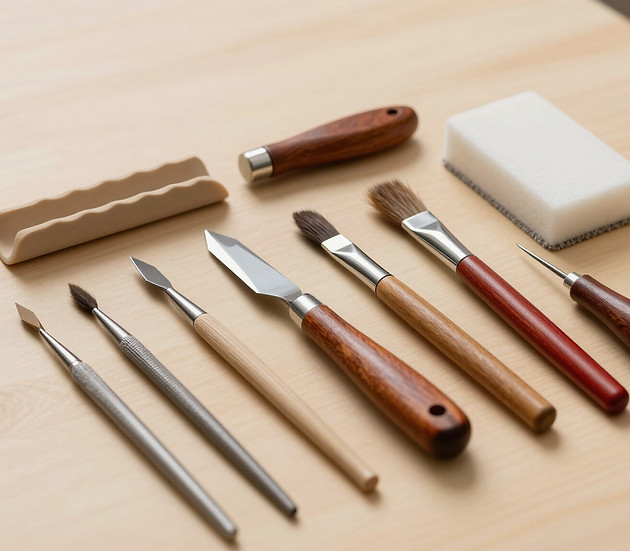
Professional Grade Tools
From trimming to intricate carving, our shop features high-quality starter kits, as well as a variety of ribs, carving and hand-building tools, and a selection of natural and synthetic sponges from brands artists trust.
Wire Clay Cutter
A length of wire (often 1–2 feet) with wooden handles. Used to slice wet clay blocks into workable pieces, cut finished pieces from the wheel head, and trim excess clay during wedging.
Potter’s Sponge
A soft sponge (often palm-sized) for smoothing surfaces, removing excess water, and cleaning work areas. Can also be used to apply or remove glaze for texture
Rib (Metal or Rubber)
A flat, arc-shaped tool for smoothing, compressing, and shaping clay on the wheel or flattening slabs. Metal ribs are sharp for cutting; rubber ribs are softer for smoothing
Clay Shredder
A tool for shredding clay into smaller pieces, often used in slip casting or for making clay dust.
Canvas Sheet / Rolling Pin
A flat sheet of canvas or a rolling pin for rolling out clay slabs in hand-building projects.
Metal Scraper
A flat, oval tool with a smooth or serrated edge for smoothing, cutting, and making patterns in clay.
Clay Knife / Fettling Knife
A thin, sharp knife for cutting and trimming clay, especially for detailed work or removing excess material from the rim.
Serrated Rib
A rib with a toothed edge for cutting and scoring clay, useful for creating patterns or joining pieces.
Tip for Beginners: In classes, you’ll use these tools repeatedly to learn proper handling, so focus on mastering the basics—wire cutter, sponge, rib, needle tool, and loop—before moving to more specialized tools
Kemper, GR pottery forms, MKM, Clay Art, Xiem, Vermont pottery works, mud tools and more!
Needle Tool
A thin, pointed tool for scoring (scratching) clay surfaces before joining pieces with slip, measuring thickness, and adding fine details or decoration.
Loop Tool
A curved, looped tool for hollowing out the interior of a pot, trimming foot rings, and refining wall thickness.
Wooden Modeling Tool
A blunt, rounded tool for compressing clay, smoothing concave surfaces, and creating gentle curves in hand-building projects.
Stylus Tools / Fine Modeling Tools
Small, pointed tools for adding fine details, carving textures, or creating decorative lines on clay
Chamois Leather
A soft leather pad for smoothing and polishing clay surfaces, especially after glazing.
Clay Stamp
A stamp with a design or pattern to press into clay for decoration.